
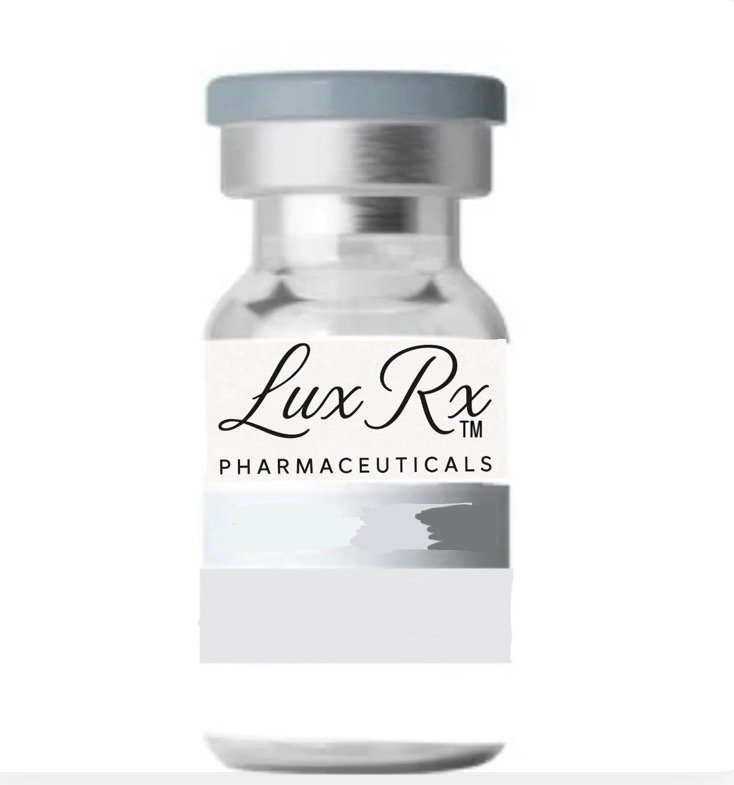
Gonadorelin
Gonadorelin is a synthetic form of gonadotropin-releasing hormone (GnRH) — the natural hormone the hypothalamus releases to regulate the reproductive system. It acts by stimulating the pituitary gland to release luteinizing hormone (LH) and follicle-stimulating hormone (FSH), which in turn support sex hormone production and reproductive function in both males and females.
In clinical practice, gonadorelin has been used to:
Assess pituitary-gonadal axis function in diagnostic testing.
Support reproductive hormone release in select infertility and hypogonadotropic conditions.
In some specialized hormone optimization protocols (e.g., with testosterone replacement therapy), stimulate endogenous hormone signaling.
For subcutaneous (SubQ) administration, gonadorelin is typically supplied as a lyophilized peptide that is reconstituted with sterile diluent and injected under the skin
Benefits
Important Note: Gonadorelin is a hormonal regulatory peptide. Its benefits relate to specific physiological pathways and medical uses, not general wellness enhancement.
Stimulates Central Hormone Release
Gonadorelin mimics natural GnRH, prompting the pituitary to release LH and FSH — essential hormones for reproductive function.
Supports Fertility Management
In fertility medicine, gonadorelin can help regulate ovulation in women and support gametogenesis (sperm production) by properly signaling gonadotropins.
Diagnostic Use
A single injection can be used in clinical settings to evaluate hypothalamic and pituitary function by assessing the hormonal response.
HPG Axis Restoration (Contextual)
In some hormone optimization programs, gonadorelin is used to attempt to maintain or restart hypothalamic-pituitary-gonadal (HPG) axis signaling, especially where exogenous sex hormones have suppressed natural hormone release.
Short-Acting & Physiologic
Because gonadorelin has a short half-life, it more closely mimics pulsatile GnRH release when administered correctly, which is important for normal pituitary response (though continuous large doses can lead to receptor down-regulation).
Gonadorelin is a synthetic form of gonadotropin-releasing hormone (GnRH) — the natural hormone the hypothalamus releases to regulate the reproductive system. It acts by stimulating the pituitary gland to release luteinizing hormone (LH) and follicle-stimulating hormone (FSH), which in turn support sex hormone production and reproductive function in both males and females.
In clinical practice, gonadorelin has been used to:
Assess pituitary-gonadal axis function in diagnostic testing.
Support reproductive hormone release in select infertility and hypogonadotropic conditions.
In some specialized hormone optimization protocols (e.g., with testosterone replacement therapy), stimulate endogenous hormone signaling.
For subcutaneous (SubQ) administration, gonadorelin is typically supplied as a lyophilized peptide that is reconstituted with sterile diluent and injected under the skin
Benefits
Important Note: Gonadorelin is a hormonal regulatory peptide. Its benefits relate to specific physiological pathways and medical uses, not general wellness enhancement.
Stimulates Central Hormone Release
Gonadorelin mimics natural GnRH, prompting the pituitary to release LH and FSH — essential hormones for reproductive function.
Supports Fertility Management
In fertility medicine, gonadorelin can help regulate ovulation in women and support gametogenesis (sperm production) by properly signaling gonadotropins.
Diagnostic Use
A single injection can be used in clinical settings to evaluate hypothalamic and pituitary function by assessing the hormonal response.
HPG Axis Restoration (Contextual)
In some hormone optimization programs, gonadorelin is used to attempt to maintain or restart hypothalamic-pituitary-gonadal (HPG) axis signaling, especially where exogenous sex hormones have suppressed natural hormone release.
Short-Acting & Physiologic
Because gonadorelin has a short half-life, it more closely mimics pulsatile GnRH release when administered correctly, which is important for normal pituitary response (though continuous large doses can lead to receptor down-regulation).